

When I was studying abroad at Koç Üniversitesi, just outside the village of Sariyer, in Istanbul, my friends and I would take a dolmuş into town, three or four times per week, on a special mission. We would weave our way through thick crowds of passersby and store keepers to the quiet, narrow side streets, deeper in the village. On a quiet, poorly-lit corner was a small café with a patio, called Veliogullari; we called it Lahmacun Heaven. The proprietor, Sönmez, served up some of the best food I had while living in Turkey. His white pharmacists coat, gray moustache, and genteel manners rendered him one of the more endearing characters in Sariyer. Dining at his café was always a pleasure.
I’m pretty sure that Sönmez would see us striding down the street and thank his lucky stars. In those days, the boys could put away a dozen lahmacun each without batting an eyelash, which was probably half of the café’s daily lahmacun output.
This recipe turned out very close to what we had in Sariyer (although next time, I’ll definitely use more greens). Crispy on the edges, dense with veggies and meat in the doughier center. Even though these do take a fair bit of time to make, I’ll definitely be revisiting this recipe — and soon!
Lahmacun
Recipe adapted from Lola-Elise, a beautiful blog written by a wedding photographer from Denver.
Dough
1 teaspoon dry active yeast
½ teaspoon sugar
1+1/2 cup of warm water
4 ½ cups of flour
Little oil to brush the dough
Topping
12 ounces of minced beef or lamb (I actually used Stop and Shop’s meatloaf blend, and really liked it)
1 big onion
2-3 cloves of garlic
2 tablespoons of butter
1 ½ cups of fresh curly parsley
1 cup of fresh mint
1 medium tomato
1 teaspoon of chili pepper
1 teaspoon paprika (the original recipe called it optional; I’d say it’s a must)
1 teaspoon of cumin (again, optional in the original recipe, but I wouldn’t do without it)
1 jalapeno (Optional; I chose to go without)
salt according to your own taste
Juice of 1 lemon (or more)
little oil to brush the dough
For the Dough

Mix together yeast and sugar, then add a half-cup of warm water to activate the yeast. Stir and cover the bowl completely. I usually put the yeast on my stovetop, in front of the oven vent, to accelerate the activation. You should keep the yeast covered for 15 minutes.
While your yeast mixture is resting, set your greens to soak in a large bowl of cool water.
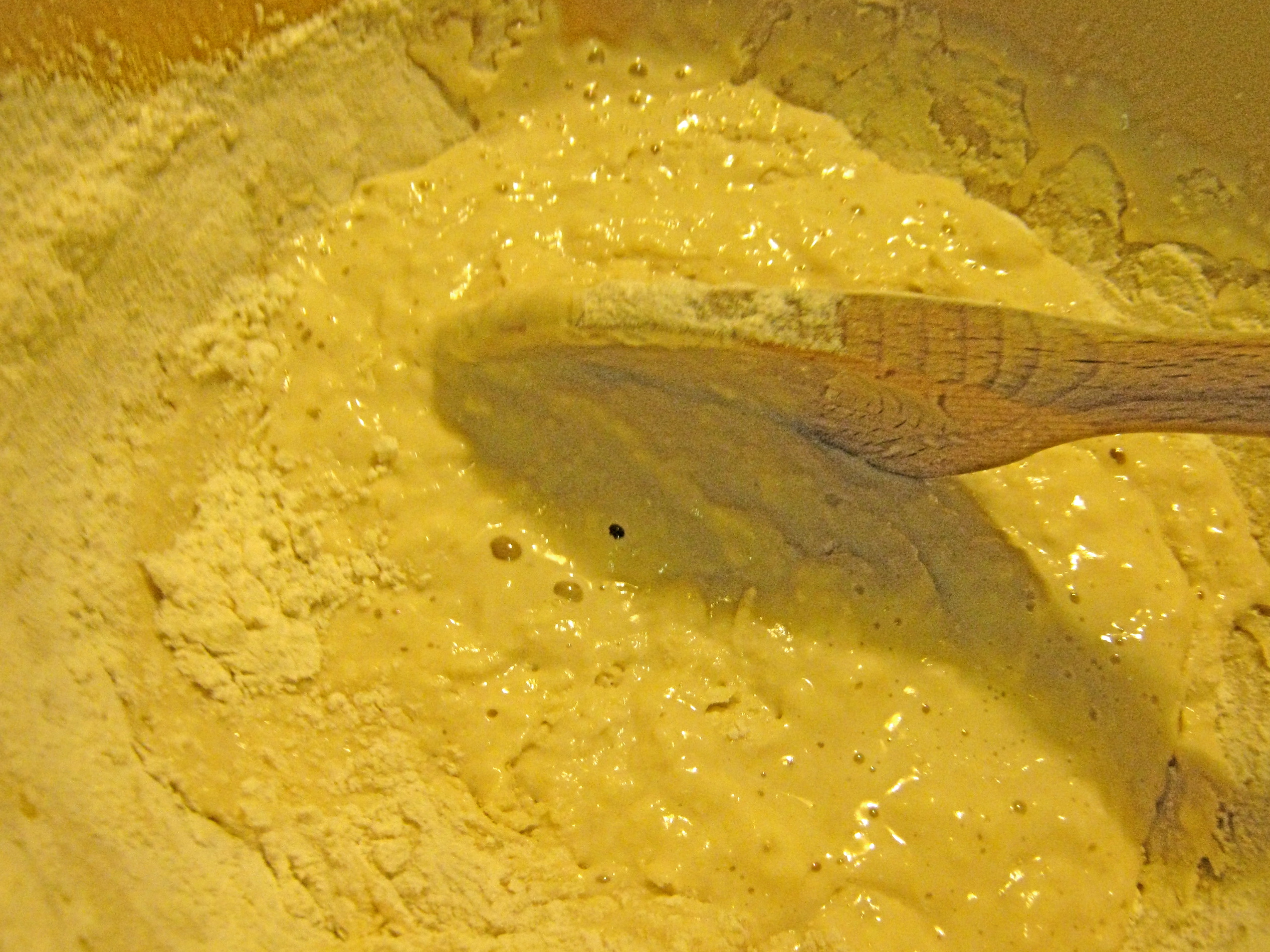
When time is up, you should have a nice foamy yeast mixture. Add this to the remaining cup of water and flour.
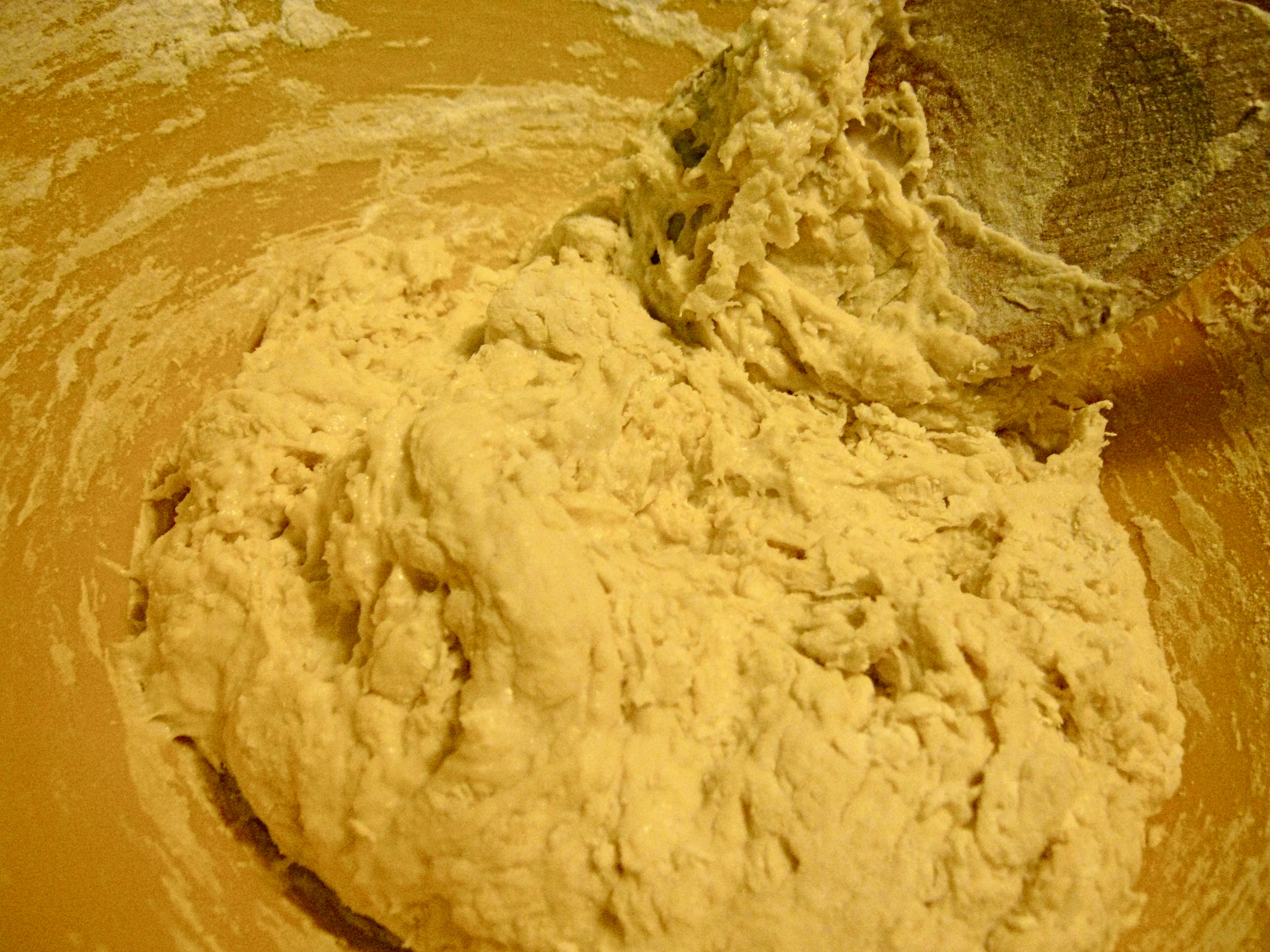
You can add water and flour as needed while mixing; I ended up adding quite a bit of water.
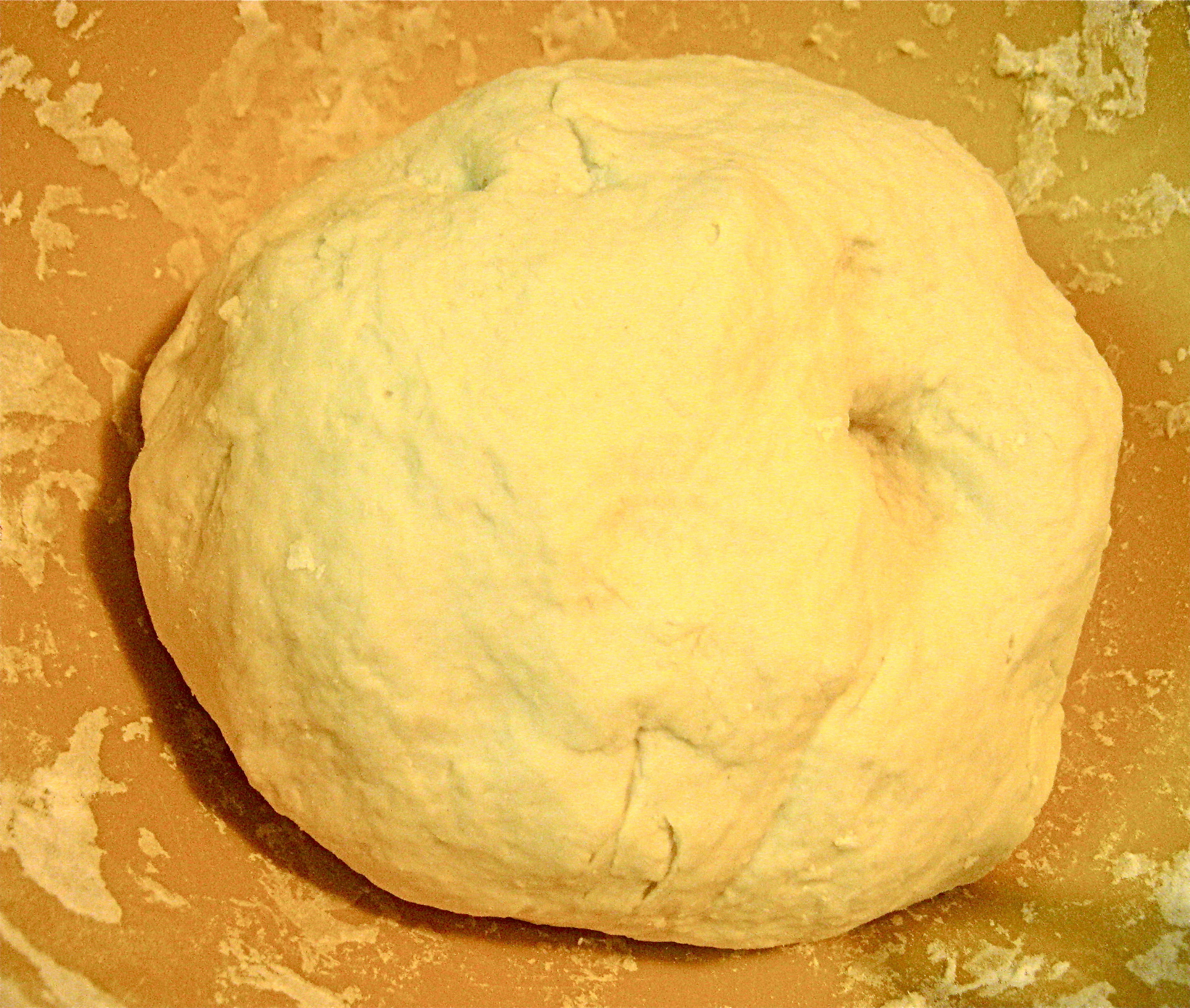
Knead well, until the dough is springy when you poke it. Be patient when kneading the dough: a poorly-kneaded dough will be difficult to work with later.
 Ball the dough and rub it down with oil (I used olive oil). Cover it with a damp cloth (I used two and a pot lid) and place it somewhere warm to rise for an hour. Again, I placed it on my stovetop, in front of the oven vent.

When you uncover the dough, it should have doubled in size. Punch the dough a bit, then drop it on a floured surface. Roll it into a cylinder, and cut into pieces a little bigger than a golf ball. You should end up with 10 – 12 pieces.

Roll your dough into balls and cover with a damp cloth. Let them rise for 20 minutes, or until the filling it ready. At this point, pre-heat your oven to 420 degrees.
For the Topping
Take your greens out of the bowl of water, and lay between two paper towels, to soak up any excess water. Chop finely.
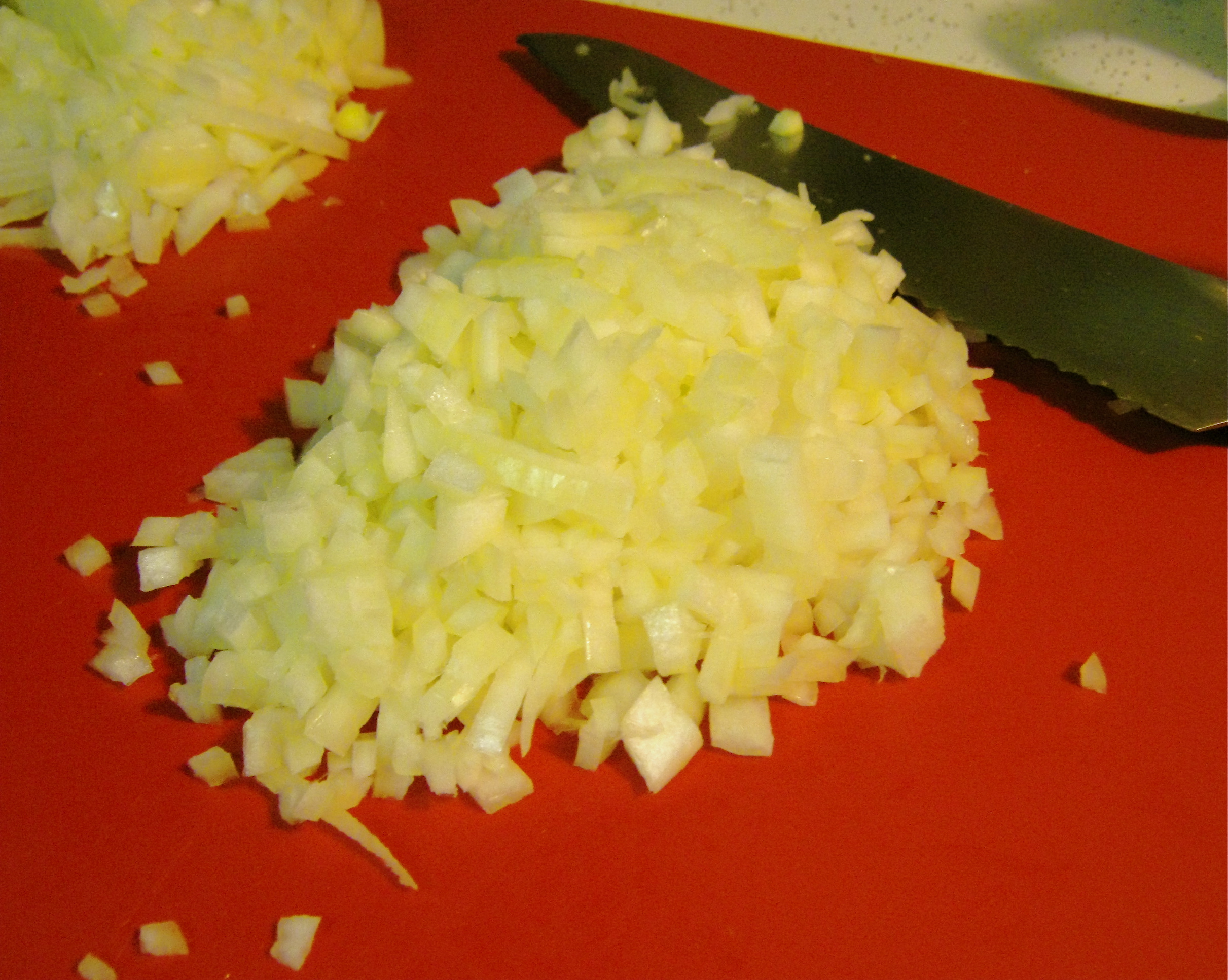
Mince the garlic and onions. The original recipe used a food processor, but I did it by hand.
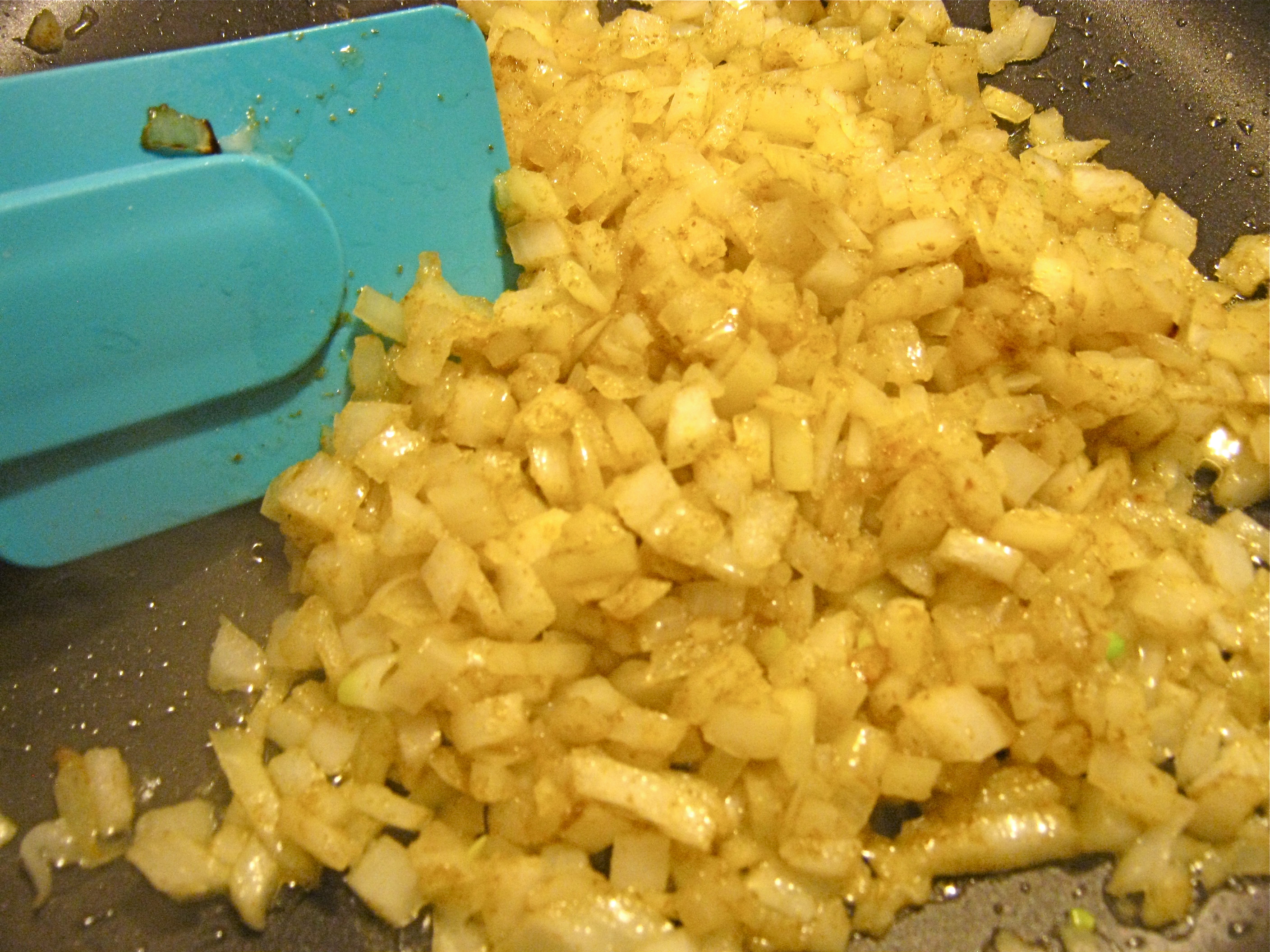
On medium-high heat, sauté garlic and onion mixture in butter for one minute.
Reduce to low heat, cover, and cook for two more minutes. Let mixture cool.
While the onion mixture is cooling, skin your tomato and chop it into small pieces. You seed the tomato if you want to, but I usually don’t.
 Combine all your ingredients in a large bowl. Add in lemon juice, salt, and spices. Mix very, very well.
Now it’s time to put it all together.
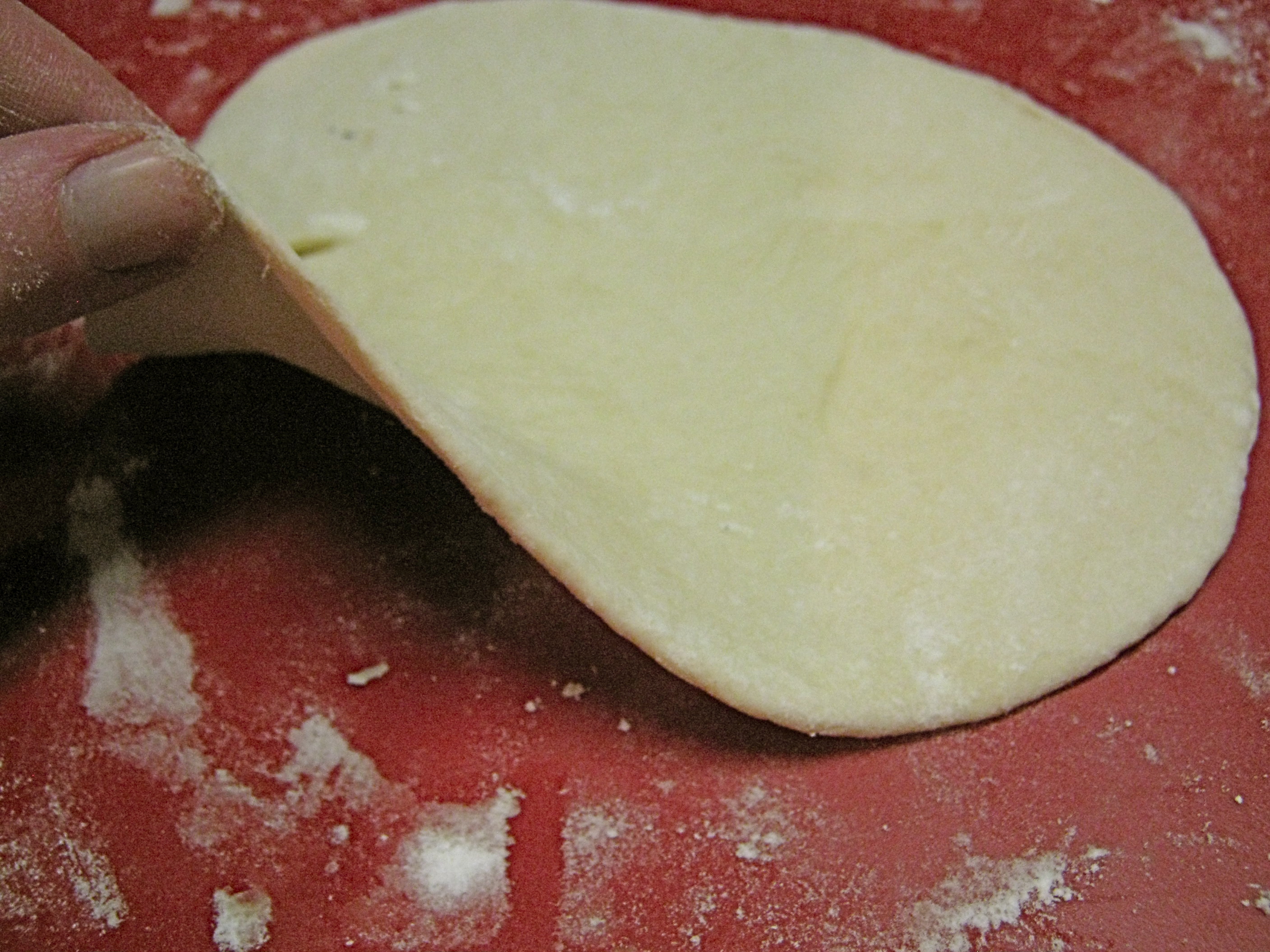
Take a piece of dough and roll it out into a circle or oval. I’m downright terrible at this, so mine … defies labels. The thinner you roll your dough, the crisper your lahmacun will be. Keep in mind that dough that is too thick/comes out too soft will be hard to roll-up with greens. Ditto dough that is too thin and becomes too crispy.

Cover a cookie sheet with foil and cover with a thin layer of cooking spray. Place two pieces of rolled dough on the sheet. You can do two baking sheets at a time, on different racks, if you make sure that you rotate the sheets down as the ones on the lower rack finish cooking. Brush the dough with olive oil and cover, carefully, with a thin layer of filling. Bake for 10 – 12 minutes, or until they are slightly browned on the edges (if you like the dough crispier, leave them in the oven a bit longer).
As you take the lahmacun out of the oven, put them in a container and cover with a damp towel. We didn’t get that far, as these were demolished as soon as they were cool enough to hold.
Traditionally, you eat lahmacun with some fresh greens (mint, parsley, etc, but you could probably use lettuce), and lemon juice. A little plain yogurt on the side (or maast-o-khiar, my recipe coming soon), makes it complete.
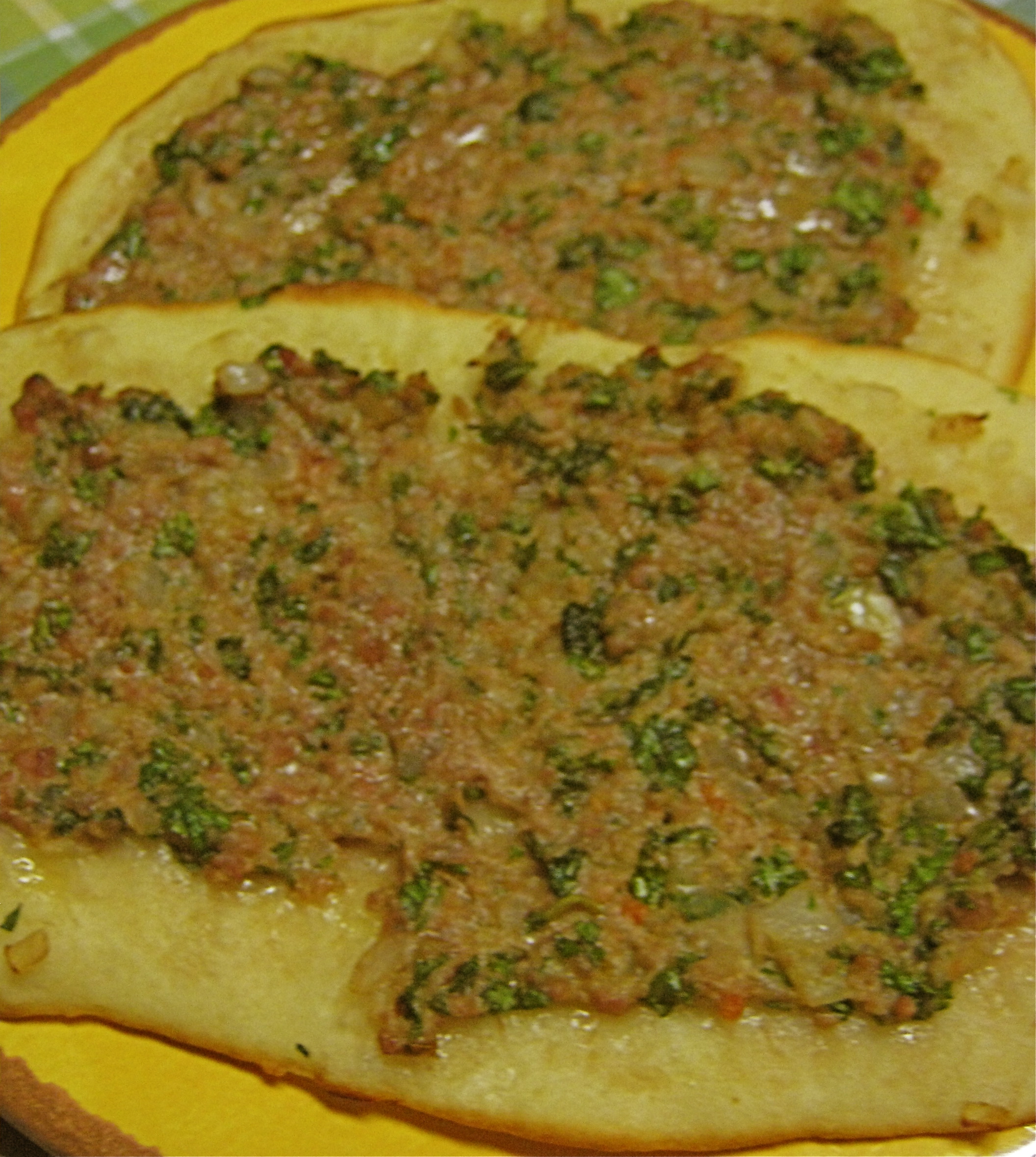
Afiyet Olsun!

 She Bakes What
I could definitely woof down a bunch of these myself, they look wonderful !
I’m placing my order now for the next time I’m down there!!!!
I love your post on Lahmacun, I used to buy these little pizzas at a middle-eastern shop frozen and then would take them home and cook an egg on top, I am not sure why it tasted so delicous and was a cheap way for me to eat something yummy and filling. Since I know longer live close to a shop with lahmacun I have looked around, but the recipes I found were for Sfiha which has a thicker dough and a different flavor. The recipe you posted looks delicous, especially since the meat mixture looks as spicy as the ones I used to eat. Thanks, I will be trying it soon 🙂